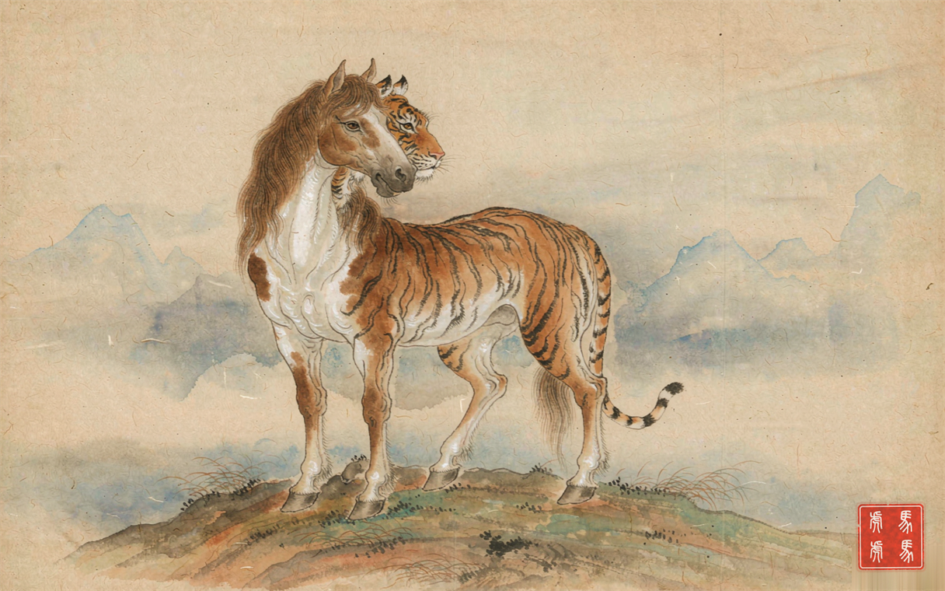
Suppose you watched a movie last night, and a friend asks how it was. It was not bad. It was not good. You would not cross the street to see it again. English fumbles for a moment and lands on “meh” or “it was fine, I guess.” Chinese does not fumble at all. It has a four-syllable answer that has been doing this job for generations: mǎmǎhūhū (马马虎虎) — literally, horse horse tiger tiger.
One phrase, two jobs
Mama huhu gets used in two slightly different ways, and learners should keep them apart.
The first meaning is careless. A student who rushes homework and makes silly mistakes did the work mama huhu. A contractor who leaves the tiles crooked built the wall mama huhu. Here the word is a criticism, and a fairly blunt one.
The second meaning is so-so — the polite shrug. Asked how the food was, the trip went, or business is doing, a Chinese speaker can answer “mǎmǎhūhū” with a small wave of the hand. It means: passable, unremarkable, nothing to write home about. This is often self-deprecating rather than insulting, and it is one of the first “attitude words” foreign learners pick up, because it lets them answer questions about their own Chinese honestly.
How can one phrase cover both sloppy and okay? The bridge is the idea of not-quite-rightness. Something mama huhu has not been done properly, and something mama huhu is not properly good — both are comfortably short of any standard.
The careless painter
Every Chinese schoolchild hears a story that pretends to explain the phrase. In the most common version, a Song dynasty painter was so absent-minded that one day he painted a tiger’s head on a horse’s body. His elder son asked what the beast was, and the father, glancing at the fierce head, said tiger. His younger son asked, and the father, glancing at the sleek body, said horse. Time passed. The elder son went hunting, saw a fine horse in a field, and shot it dead, believing he had bagged a tiger. The younger son met a real tiger in the mountains, remembered his father’s word horse, and walked up to ride it.
The story ends badly for the household and gives the painter his nickname: 马虎 (mǎhu) — “horse-tiger” — which by itself already means careless. Say it twice, mǎmǎhūhū, and you get the familiar sing-song form.
Should anyone believe this tale? Almost certainly not. It appears in no Song dynasty record, and it has the structure of a joke, not a chronicle — two sons, two mistakes, tidy moral. Treat it as folk etymology: a story invented to explain a phrase that people already used. But it survives because it does what the phrase does. A tiger that is half a horse is precisely the kind of thing a mama huhu person would produce.
What the doubling does
Linguistically, the interesting part is not the animals but the repetition. Chinese speakers double words constantly to shift their tone — 随便 (suíbiàn, “whatever”) becomes 随便随便, 好好 becomes 好好好, and 马虎 becomes 马马虎虎. The doubled form is looser, more colloquial, a little softer on the ear. Mǎhu said to an employee is a reprimand. Mǎmǎhūhū said with a smile is almost affectionate.
There is also a small accident of sound worth noticing: 虎 (hǔ, tiger) and 糊 (hú, muddled) are near-homophones, and 马虎 sits one step away from 含糊 (hánhu, vague). The phrase lives in a neighborhood of words all meaning not quite clear, not quite right.
The two animals themselves are old, respectable residents of the written language — both horse and tiger appear among the recognizable pictures carved on oracle bones three thousand years ago, back when Chinese characters really were drawings, a story we tell in our piece on oracle bone script. The idiom is modern; the materials are ancient.
How to use it without stepping on anyone
A few honest examples:
- “How’s your Chinese?” — “Mǎmǎhūhū.” (Safe, modest, everyone smiles.)
- “How was the hotel?” — “Mama huhu.” (Fine. Would not recommend. Would not complain either.)
- “Your report has three wrong figures.” — “你做得太马虎了!” (Tài mǎhū le — you were too careless! This is a real criticism, and at work it stings.)
The trap for learners is using the cheerful so-so sense in the wrong room. Telling a chef his dish was mama huhu is not a shrug; it is an insult with a smile attached. When in doubt, soften with a subject: “My notes are mama huhu” criticizes you, which is always the safe direction.
Chinese has a whole shelf of phrases like this — short, funny on the surface, precise underneath. If that is the part of the language you enjoy, a good next stop is the culture that produced the teahouse conversations where such phrases live: start with Chinese Tea 101, and you will see why so much everyday speech was polished over a pot of something hot.